Talk 1
Title: Intelligence Science and Society 智能科学与经济社会
Abstract: The interface between statistical learning and policy optimization has achieved tremendous success in human-level controls, generative AI, large language models, personalized treatments, and various applications to digital economics and society. This talk will introduce the rise of intelligent data science and stress its importance in societal applications, from dynamic pricing and sentiment learning to financial asset pricing and auditing corporate narratives. We will showcase its applications in the construction of high-resolution socioeconomic indices, the detection of financial statement flaws, the measurement of misinformation, and other areas.
统计学习与策略优化之间的交融在类人的控制、生成式人工智能、大型语言模型、个性化治疗以及数字经济和智能社会的各种应用中取得了巨大成功。本次演讲将介绍智能数据科学的兴起,并强调它在社会应用中的重要性。我们将展示其在高分辨率社会经济指数构建、财务报表舞弊检测、金融新闻情感学习以及其它应用,涵盖从动态定价和情感学习到金融资产定价和公司报告审计等诸多领域。我们将展示其在高分辨率社会经济指数构建、财务报表舞弊检测、虚假信息度量等应用。
Talk 2
Title: SMART Fine-tuning Factor Augmented Neural Lasso
Abstract: Fine-tuning is a widely used strategy for adapting pre-trained models to new tasks, yet its methodology and theoretical properties in high-dimensional nonparametric settings with variable selection have not yet been developed. We propose a source-model-augmented residual tuning (SMART) framework, which incorporates the pre-trained source model into the target learner and estimates only the residual target-specific component. The approach is widely applicable, from parametric and sparse models to neural networks and blackbox machine learning models. We focus on the development of fine-tuning factor-augmented neural Lasso, resulting in SMART-FAN-Lasso. This transfer-learning framework for high-dimensional nonparametric regression with variable selection simultaneously handles covariate and posterior shifts. We use a low-rank factor structure to manage high-dimensional dependent covariates and a residual tuning decomposition in which the target function is expressed as a function of source model and other target-specific variables, thereby reducing the effective complexity of the target task. We derive minimax-optimal excess risk bounds for SMART-FAN-Lasso, characterizing the precise conditions, in terms of relative sample sizes and function complexities, under which fine-tuning yields statistical acceleration over single-task learning. Extensive numerical experiments across diverse covariate- and posterior-shift scenarios demonstrate that SMART-FAN-Lasso consistently outperforms standard baselines and achieves near-oracle performance even under severe target sample size constraints, empirically validating the derived rates. (Joint work with Jinhang Chai, Cheng Gao, and Qishuo Yin)
Bio:
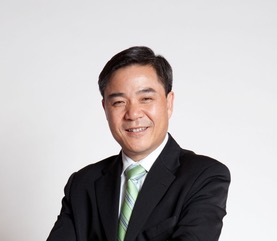
Jianqing Fan, a member of the US National Academy of Sciences, the Royal Academy of Belgium, and Academia Sinica, is the Frederick L. Moore’18 Professor of Finance, Professor of Operations Research and Financial Engineering, and Former Chairman of the Department of Operations Research and Financial Engineering at Princeton University, where he directs both Financial Econometrics and Statistics and Data Science labs. He received his Ph.D. from the University of California at Berkeley and held faculty positions at the University of North Carolina at Chapel Hill, University of California at Los Angeles, and the Chinese University of Hong Kong before joining Princeton University. He is a fellow of the American Association for the Advancement of Science, the Institute of Mathematical Statistics, the American Statistical Association, and the Society of Financial Econometrics. He has served as the president of the Institute of Mathematical Statistics and the International Chinese Statistical Association, and has been a joint editor of the Journal of the American Statistical Association, Annals of Statistics, Probability Theory and Related Fields, Econometrics Journal, Journal of Econometrics, Journal of Business and Economics Statistics, and Management Science (Finance Department editor). Awards include the COPSS Presidents' Award, the Morningside Gold Medal of Applied Mathematics, the Guggenheim Fellowship, the P.L. Hsu Prize, the Royal Statistical Society Guy medal in silver, the Noether Distinguished Scholar Award, Le Cam Award and Lecture, the Frontiers of Science Award, and the Wald Award and Lecture. His research interests include high-dimensional statistics, data science, machine learning, deep learning, mathematics of AI, financial economics, and computational biology. He coauthored 4 books and published over 300 highly cited papers, with nearly 100,000 citations.
Registration: https://www.wjx.top/vm/h4UCVaL.aspx#
Recording: https://archive.ymsc.tsinghua.edu.cn/pacm_lecture?html=Intelligence_Science_and_Society_SMART_Fine_tuning_Factor_Augmented_Neural_Lasso.html