Host: 刘正伟、刘子文、刘锦鹏、程嵩
Abstract: Scalable quantum computing demands more than increasing the number of qubits: it requires architectures that combine universal programmability, efficient control, and long-term operational stability. Yet, as quantum processors grow, the complexity of individually addressing qubits and maintaining precise calibration becomes an increasingly formidable challenge. In this talk, I will present our recent progress toward overcoming these limitations through two complementary approaches: universal quantum dynamics with global control and self-calibrating quantum fault tolerance.
First, I will challenge the conventional wisdom that universal quantum computation requires precise local control. We establish a necessary and sufficient condition for achieving universality using global control fields, revealing that a broad class of analog quantum simulators possesses far greater computational expressivity than previously recognized. By combining this theoretical framework with direct quantum optimal control, we experimentally engineer effective three-body interactions and observe signatures of symmetry-protected topological dynamics in Rydberg atom arrays, demonstrating programmable quantum dynamics beyond native hardware interactions.
Second, I will address a fundamental obstacle to long-duration fault-tolerant quantum computation: how can a quantum computer remain calibrated while continuously running? We develop a theoretical framework for self-calibrating quantum fault tolerance, in which syndrome measurements serve a dual purpose—protecting logical quantum information and providing real-time feedback for hardware calibration. We establish provable convergence guarantees for online calibration under both static and time-dependent control drift, with convergence rates independent of code distance for quantum LDPC codes. These results suggest a path toward quantum processors that can autonomously maintain their operating conditions without interrupting computation.
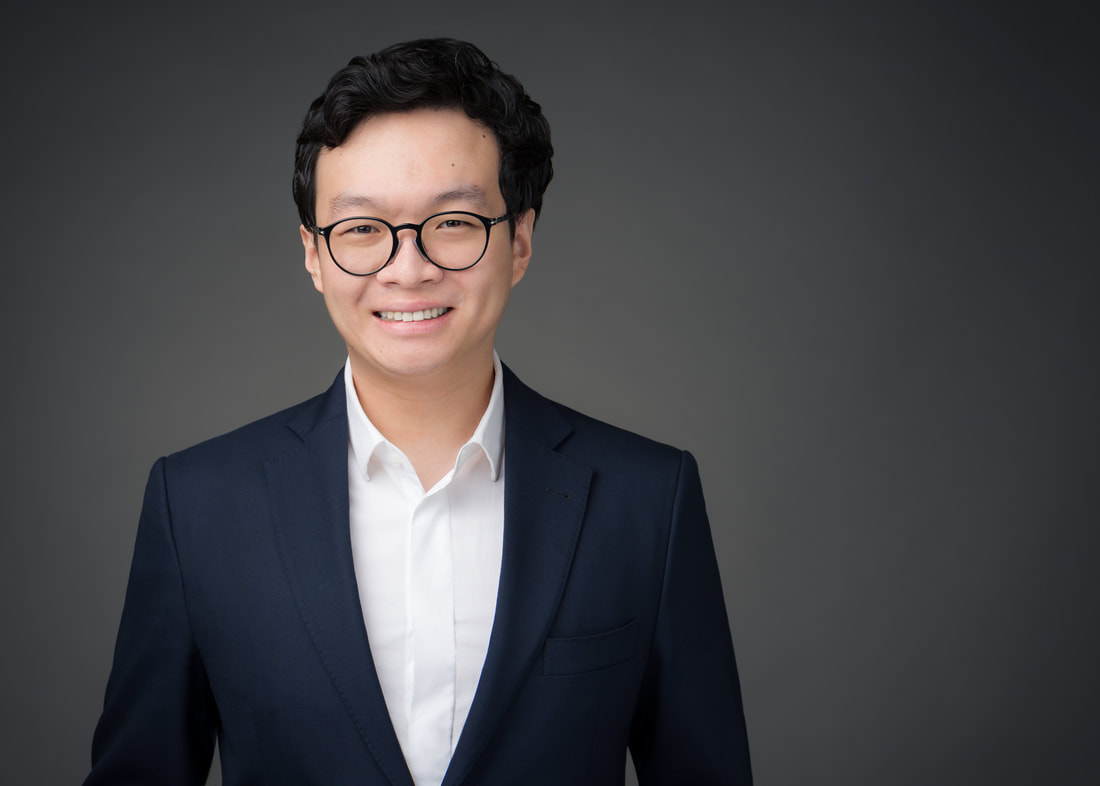
报告人信息:扈鸿业,中国科学院物理研究所特聘研究员。2026年6月,在国家及中国科学院相关项目支持下加入中国科学院物理研究所。此前,他曾任哈佛大学量子计划(Harvard Quantum Initiative)HQI Fellow,在哈佛大学物理系及哈佛—麻省理工超冷原子中心开展博士后研究,与Mikhail Lukin、Susanne Yelin、Markus Greiner、Soonwon Choi 等学者合作,研究方向涵盖量子计算与模拟、量子学习理论、量子多体系统控制及超冷原子实验。目前,他的研究聚焦于人工智能与量子计算的交叉融合,致力于将人工智能、统计学习与量子信息理论相结合,探索面向早期容错量子计算的新型计算架构、量子算法、量子最优控制及其潜在应用。
迄今,他已在国际同行评审期刊发表学术论文20余篇,其中以第一作者或通讯作者身份在《Nature Physics》(已接收)、《Nature Communications》《PRX Quantum》等期刊发表多项代表性成果。相关研究曾获美国物理学会《Physics》及英国物理学会《Physics World》等国际学术媒体专题报道。扈鸿业于2022年3月获得美国加州大学圣地亚哥分校物理学博士学位,2016年获得北京大学物理学学士学位。