Title: “Machine learning - a way to unravel the hidden gravitational-wave sky”
Abstract:
Over the past decade, gravitational-wave astronomy has evolved from a long-standing theoretical pursuit into an observational science. The first detection validated decades of pioneering work and opened an entirely new way of studying the Universe, transforming astrophysics and enabling new tests of fundamental physics.
Yet, a decade after that discovery, the observed gravitational-wave sky remains transient. The signals detected so far have come solely from the final moments of compact-object mergers. The persistent gravitational radiation expected from rapidly rotating neutron stars - the continuous gravitational - wave sky - remains hidden beneath detector noise. Detecting these continuous gravitational waves could reveal otherwise invisible neutron stars, probe their internal structure, and enable new precision tests of gravity.
The most sensitive searches could detect, within our Galaxy, gravitational - wave signals produced by fractional deformations of rapidly rotating neutron stars at the level of one part in a million. Even without a detection, this sensitivity allows us to place meaningful constraints on the physical properties of Galactic neutron stars.
Reaching such sensitivity, however, requires confronting one of the most demanding data - analysis problems in gravitational - wave astronomy. Continuous - wave signals are extremely weak, long - lasting, and drawn from an immense space of possible waveforms. Their detection relies on optimized search strategies, hierarchical semi-coherent methods, sophisticated follow - ups, high-performance and volunteer computing, and substantial computational resources.
The rapid progress of artificial intelligence raises a natural question: can machine - learning methods help tackle this challenge more effectively? We will present recent work showing that neural networks offer a promising new direction, while highlighting the conceptual and computational challenges that remain.
Together, these developments place continuous gravitational - wave research at the intersection of fundamental physics, astrophysics, large - scale computing, advanced statistical inference, and modern machine learning.
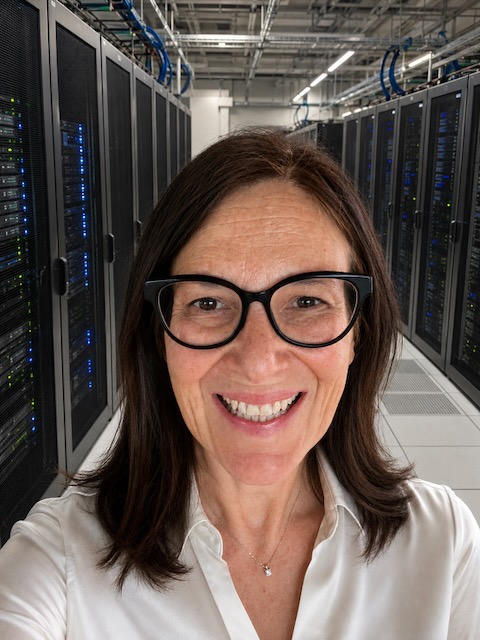
MAP leads an independent research group at the Max Planck Institute for Gravitational Physics in Hannover (Germany) and is Professor at Leibniz University Hannover. She got her PhD at the University of Rome (Italy) in 1997, and after various appointments in Italy, Germany and the USA she moved to Hannover in 2007.
Her research interests lie in the field of gravitational wave data analysis and in particular in the long-time quest to detect continuous gravitational waves.
MAP has held positions of scientific leadership in the LIGO Scientific Collaboration, both in relation to the continuous gravitational wave search efforts, and to the data analysis activities across the entire spectrum of different searches for over two decades — for example she was one of the six editors of the historic paper “Observation of Gravitational Waves from a Binary Black Hole Merger", Phys.Rev.Lett. 116 (2016) 6, 061102. However in mid August 2018 she left the Collaboration in support of a more flexible data-access model. She has been an Einstein@Home co-Pi since its inception in 2005.
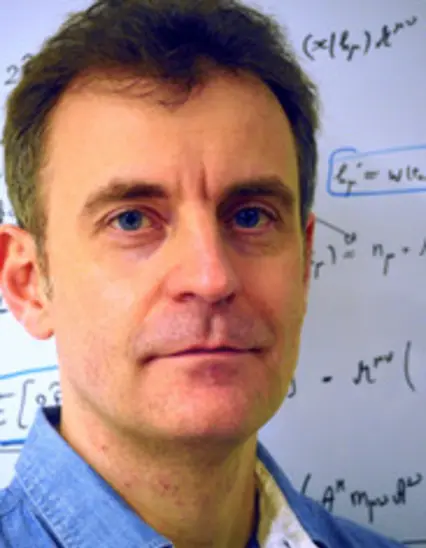
Reinhard Prix is a Senior Scientist at the Albert Einstein Institute (AEI) Hannover, where he works on the search for continuous gravitational waves from deformed, spinning neutron stars.
He studied theoretical physics in Graz (Austria), completed his master’s degree at the École Normale Supérieure in Paris, and obtained his PhD at the Observatoire de Paris-Meudon under the supervision of Brandon Carter. He held research positions at the University of Southampton working on superfluid neutron-star models, and at AEI Golm, where he shifted his attention to the search for continuous gravitational waves. He took up a Senior Scientist position at AEI Hannover in 2007 in Bruce Allen's division, and in 2018 joined Maria Alessandra Papa's research group focused on continuous gravitational-wave searches.
He is one of the founding scientists of the Einstein@Home project, a major distributed-computing platform for continuous gravitational-wave searches. As a member of the LIGO Scientific Collaboration, he contributed to the first detection of gravitational waves in 2015, in particular through work on the characterization of the black-hole ringdown signal.