主讲人 Speaker:Rob Morris (IMPA)
时间 Time:Thur., 16:00-17:00, Oct. 15, 2026
地点 Venue:C548, Tsinghua University Shuangqing Complex Building A; Zoom Meeting ID: 271 534 5558 Passcode: YMSC
课程日期:2026-10-15
Abstract:
In this talk I will discuss a monotone version of the Ising model on Z^d, in which sites update from 0 to 1 (but not in the other direction) according to an arbitrary monotone, homogeneous, finite-range update rule. It turns out that these models can be partitioned into d+1 universality classes, which are characterised by their behaviour on sparse random sets. More precisely, if sites are initially infected independently with probability p, then the expected infection time of the origin is either infinite, or is a tower of height r for some r \in {1,...,d}.
Perhaps surprisingly, understanding these models has proved useful for studying the (much more complicated) behaviour of non-monotone models. In particular, I will describe some recent applications (due to Hartarsky, Marêché, Martinelli, Toninelli, and others) to kinetically constrained models of the liquid-glass transition.
Based on joint work with Paul Balister, Béla Bollobás and Paul Smith.
Bio:
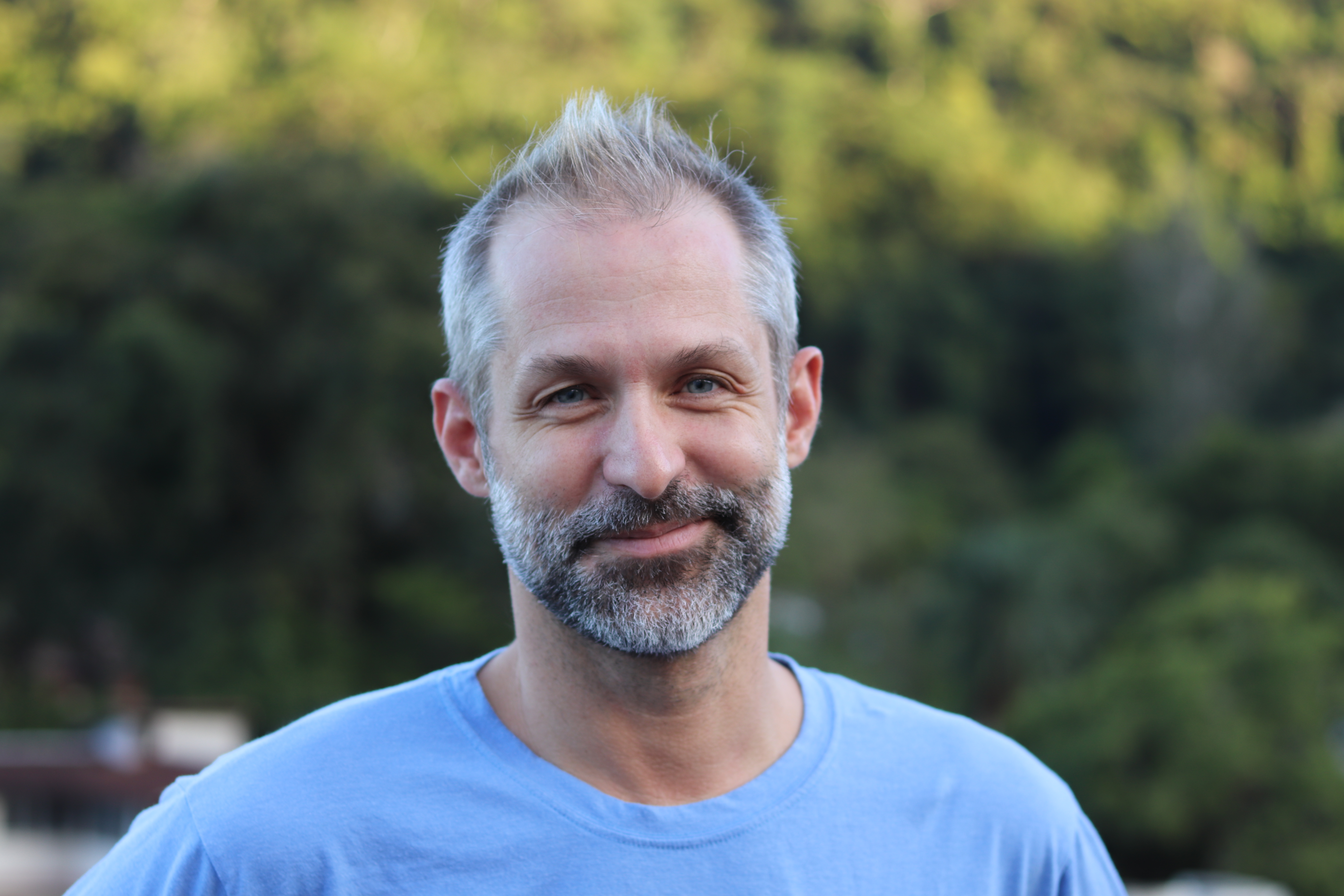
Rob Morris is a Full Professor at IMPA, in Rio de Janeiro, working in the area of probabilistic combinatorics. He is best known for introducing the method of hypergraph containers, giving an exponential improvement for the diagonal Ramsey numbers, showing that flat Littlewood polynomials exist, and for his work on monotone cellular automata. He has also written two textbooks aimed at undergraduate students, and has supervised numerous PhD students and postdocs at IMPA, resulting in the development over the past 15 years of a vibrant and rapidly growing combinatorial community in Brazil.
Morris is a member of the Brazilian Academy of Sciences and a Fellow of the Royal Society, and has won several prizes, including the Leroy P. Steele Prize for Seminal Contribution to Research, the MCA Prize, the UMALCA Prize, the Fulkerson Prize, the Polya Prize, two Frontiers of Science Awards, and the European Prize in Combinatorics. He was a plenary speaker at the 2026 International Congress of Mathematicians.
Recording:https://archive.ymsc.tsinghua.edu.cn/pacm_lecture?html=Universality_for_Monotone_Cellular_Automata.html